By Michael Sundine, MD
If you’re starting to notice jowls, loose skin under your chin, or you’re simply tired of relying on fillers, you may be considering a facelift. One of the most common concerns patients seeking a facelift have is: Will my scars be visible? That’s a very earsonable question…and an important one.
The Goal: Look Younger Not “Operated On”
A well-performed facelift should do two things:
- Help you look 10-20 years younger
- Make it look like you never had surgery at all
Where Are Facelift Scars?
Facelift incisions are carefully placed in natural contours and hidden areas of the face. Most patients will have incisions in some combination of these areas.- Within or along the hairline near the temples
- Around the natural curves of the ears
- Behind the ear, often extending into the hairline
- Occasionally, a small incision under the chin (for neck contouring)
Why Technique Matters More Than “Short Scars”
You may have heard of “short scar” facelifts. While that sounds appealing, shorter isn’t always better. What matters most is:- Strategic placement
- Respecting natural anatomy
- Avoiding distortion of the hairline or ears
- Visible color mismatch (cheek vs. ear skin)
- Distorted sideburns
- Noticeable hairline changes
- Scars that are visible from a distance
The Art of Hiding Facelift Scars
Several key factors determine how well scars are hidden:- Hairline Preservation
- Moving hair-bearing skin unnaturally
- Creating gaps or notches in the hairline
- Distorting the sideburn
- Natural Ear Contours
- Neck and Behind-the-Ear Placement
- Hairline distortion
- Visible step-offs or irregularities
What About the Chin Incision?
Not every patient needs an incision under the chin, but many benefit from it. This small, well-hidden incision allows for:- Smoothing neck bands
- Improving jawline definition
- Removing excess fat
- Tightening deeper neck structures
What Can You Expect?
With meticulous technique:- Facelift scars typically fade significantly over time
- Most patients feel comfortable wearing their hair up
- Others rarely notice you’ve had surgery—only that you look refreshed
The Bottom Line
The difference between a natural-looking facelift and an obvious one often comes down to how and where the incisions are placed.Facelift Incision Placement: Key Factors for Minimal Scarring
The most important factors in facelift incision placement are the hairline, skin laxity, and natural variations in skin color and texture. When these elements aren’t carefully considered, the result can be visible, telltale signs of surgery. A well-planned facelift prioritizes natural anatomy and scar concealment to achieve seamless, youthful results.Ear Incisions
The 4 Key Areas of Facelift Incisions
A comprehensive facelift typically involves careful planning in four primary areas:- Temple Hairline
- Around the Ears
- Behind the Ear (Posterior Hairline)
- Under the Chin (Submental Incision, when needed)
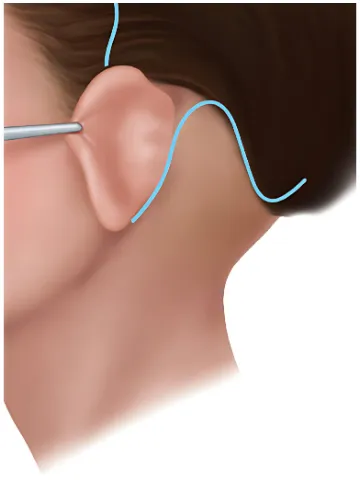
Facelift Incisions-Behind the ear and posterior hairline
Temple Incision: Preserving a Natural Hairline
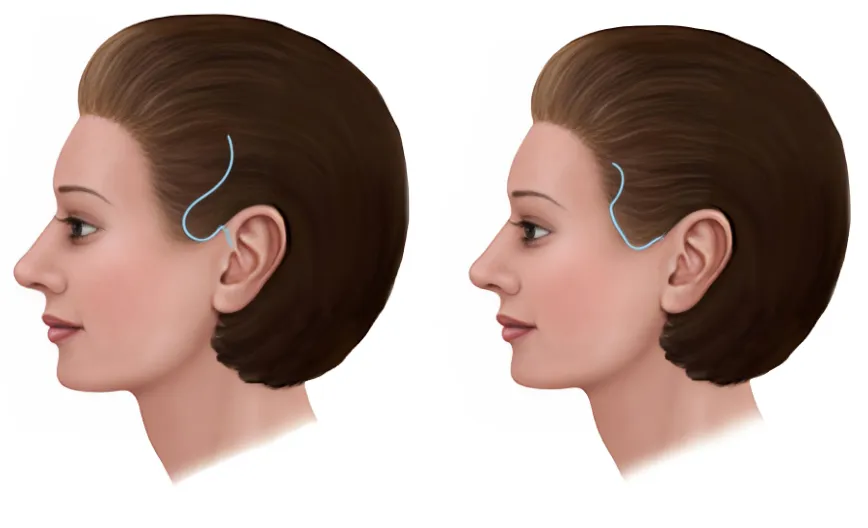
Temple incisions can be placed either within the hairline or along the hairline (as seen in the illustration below, depending on:- Degree of facial skin laxity
- Natural sideburn shape and position
- Distance between the outer eye and hairline
- Preservation of the sideburn
- Natural hairline proportions
- Strategic incision design (including subtle adjustments within the sideburn when needed) to prevent shifting non-hair-bearing skin into hair-bearing areas
Temple incisions in facelifting
Around the Ears: Avoiding Visible Contrast
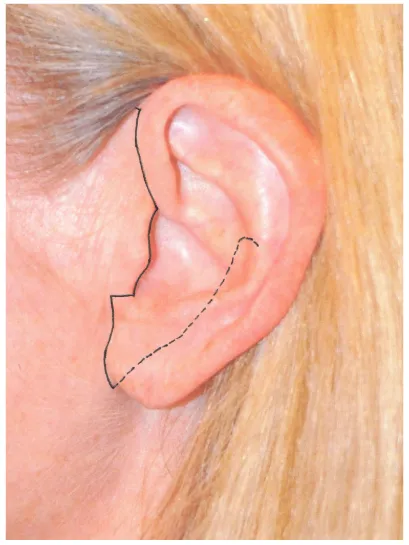
Incisions around the ears require meticulous attention to:- Skin color differences (ear vs. cheek)
- Skin thickness and texture
- Natural ear contours
Behind the Ear: Preventing Hairline Distortion
The incision behind the ear is essential for removing excess neck skin. However, incorrect placement can lead to:- Hairline notching
- Shifting non-hair-bearing skin into the scalp
- Visible deformities that make wearing hair up uncomfortable
Submental (Under-Chin) Incision: Advanced Neck Contouring
The submental incision is not required for every patient, but it is commonly used to improve neck definition. This small incision allows surgeons to:- Address neck muscle banding
- Remove excess fat (including subplatysmal fat)
- Refine the jawline
- Modify deeper neck structures, including the platysma muscle
Optimal Placement Matters
Traditionally, this incision was placed directly in the chin crease to hide the scar. However, this can deepen the crease and emphasize a double chin, especially when looking downward. Best practice is to place the incision:- Approximately 1 cm behind the natural crease
- Kept short (about 2–2.5 cm) to prevent migration onto the visible part of the chin
The Takeaway
Precise facelift incision placement is the foundation of natural-looking results and minimal scarring. By carefully accounting for hairline anatomy, skin characteristics, and facial structure, it’s possible to achieve significant rejuvenation without visible evidence of surgery. Read more about the full recovery process on our Facelift Newport Beach page. Ready to Learn What’s Right for You? Every face is different, and your incision plan should be customized to you. Schedule a private consultation with a board-certified plastic surgeon to- See real patient results
- Understand your personalized plan
- Learn exactly what your scars would look like